
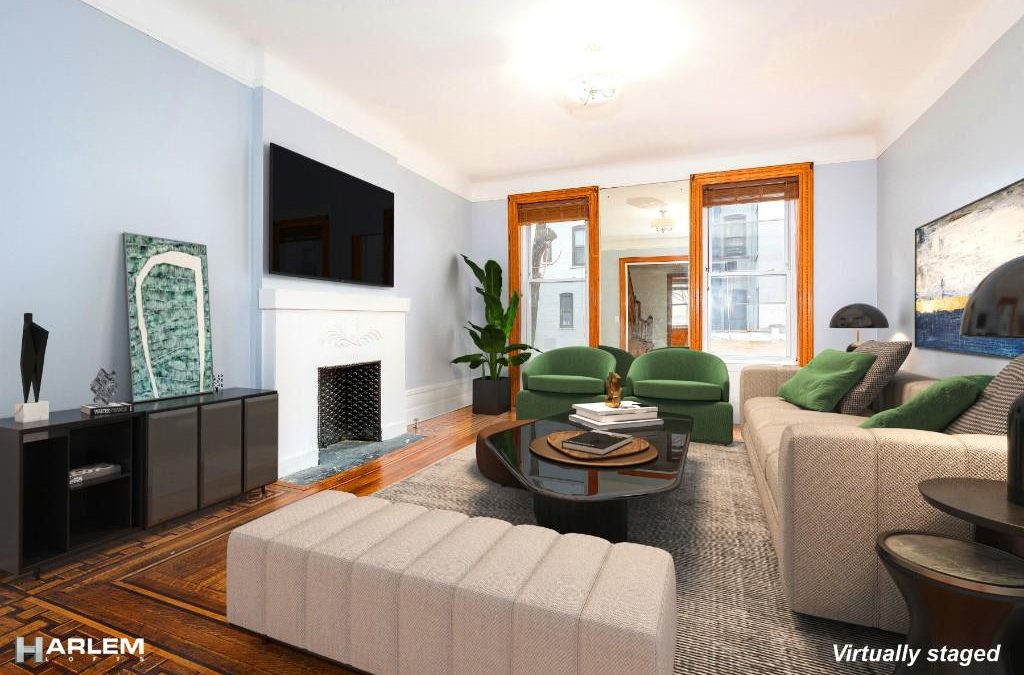
Somewhere between a downtown loft tour and a third lost bidding war, plenty of buyers start looking north. The pull toward South Harlem townhouses for sale has little to do with settling. It comes down to math, space, and getting far more for the money in a neighborhood that is genuinely having a moment. Once a buyer runs the numbers, the appeal stops feeling like a compromise and starts feeling like a smart move.
The Math That Sends Buyers Uptown
Price per square foot is where the story begins. In Tribeca, SoHo, and the Financial District, the cost of space has climbed to a point where a modest apartment can swallow a serious budget. Move the same dollars to South Harlem and the picture changes completely, because the gap between a downtown two-bedroom and a full Harlem townhouse is wide enough to rethink the whole search.
That gap is exactly what draws people to the island. A Lower Manhattan budget that buys a compact apartment downtown can stretch toward an entire house here, with floors to spare. Buyers who treat the move as a long-term real estate investment tend to notice this first, because the value per dollar is simply hard to argue with.
The comparison sharpens when you picture specific homes. Downtown, a high budget often translates into a comfortable apartment with a doorman and a shared roof deck. Uptown, that same figure can reach a townhouse with its own front door, a garden out back, and enough floors to give everyone their own corner. Once a buyer sees the two side by side, the math stops feeling abstract and starts feeling personal.
What Your Money Buys At Each Price Point
Entry-level townhouses in South Harlem invite vision and a renovation budget, while turnkey, fully renovated homes let you move in and unpack. Both ends of the range offer something downtown rarely can, which is square footage measured in thousands rather than hundreds.
There is also a difference in what you own. Downtown, your budget often buys a slice of a building. Here, you can buy the whole thing. For buyers weighing the long view, the case for buying a townhouse in upper Manhattan rests on that simple shift, from owning a unit to owning a home with land beneath it.
Condition drives a lot of the decision. A renovated home costs more upfront but spares you the months of work, while a house that needs love rewards patience with instant equity. Knowing which version suits your timeline and your budget is the first real step in a smart uptown search.
Space Downtown Apartments Can’t Offer
Multiple floors change how a home feels. A townhouse gives you room to separate work from rest, guests from family, and quiet from noise, all under one roof. A private entrance, a stretch of stairs, and distinct floors create a sense of space that a single-level apartment downtown rarely delivers.
Outdoor space seals the argument for many buyers. A backyard, a garden, or roof access turns a house into a retreat, and that kind of private open air is a genuine rarity in Lower Manhattan. For a growing family or anyone craving room to breathe, the contrast is hard to overlook.
Flexibility is the quiet gift of all that room. A floor can become a home office one year and a nursery the next, a guest suite today and a studio tomorrow. A house grows and adapts with the people inside it, while an apartment locks you into a fixed footprint. For buyers whose lives are still taking shape, that room to change course carries real value.
Owning The Whole Building Instead of Answering To A Board
A townhouse frees you from the co-op board approval process and the shared rules that come with apartment living. You renovate on your own terms and your own timeline, without a committee weighing in on your kitchen. For buyers who have sat through a co-op interview, that freedom alone can justify the move, and it is one reason multi-unit townhouses appeal to owners who want flexibility built into the home.
That flexibility includes the option to set up an income-producing apartment for the owner. A garden or top-floor unit can offset the cost of the home, a possibility that simply does not exist when you buy a single apartment in a larger building downtown.
Who Is Making The Move Uptown
The buyers heading north are a varied group, and that variety says something about the appeal. Young families chasing space, professionals tired of bidding wars, and longtime apartment dwellers ready to own all find something here. What they share is a willingness to trade a famous zip code for a home that actually fits their lives, and they rarely look back once they settle in.
Many of them arrive expecting a compromise and leave feeling they upgraded. The extra space, the private outdoor area, and the freedom of owning a whole building reshape how a day feels at home. For a lot of these buyers, the move that started as a budget decision becomes the best housing choice they have made.
The Commute Trade-Off Buyers Decide They Can Live With
The commute is the question everyone asks, and the answer is friendlier than people expect. Express trains connect South Harlem to Midtown and downtown in a stretch of time that surprises most newcomers, and the daily ride starts to feel small once you picture the home waiting at the end of it.
For buyers used to paying a premium just to shave a few minutes off a walk to the office, the trade feels reasonable. A slightly longer ride in exchange for an entire house, with outdoor space and room to grow, is a deal a lot of people are happy to make.
Weekend life shifts the calculation further in the neighborhood’s favor. Instead of escaping a cramped apartment, residents linger at home, host friends in the garden, and spread out across the floors. The commute, measured against that quality of life, starts to look like a small price for a much bigger reward.
Why South Harlem Is Drawing Attention Right Now
Beyond the math, the neighborhood itself is pulling people in. New restaurants, independent shops, and a thriving cultural scene have reshaped the blocks, and the energy is easy to feel on a walk. The momentum is real, and buyers want to be part of it before prices catch up to the buzz.
Historic district protections keep the character intact even as the area evolves, which reassures buyers who worry about overdevelopment. The Landmarks Preservation Commission oversees changes in these districts, and that stewardship, paired with steady long-term appreciation in an established part of Manhattan, makes the neighborhood feel like a place to put down roots rather than a quick flip.
Timing is part of the appeal, too. Neighborhoods that combine strong character with ongoing investment tend to reward buyers who arrive a little early, before the wider market catches up to what locals already know. South Harlem sits in that sweet spot for many buyers, established enough to feel secure yet still climbing, which is a rare and appealing combination.
A Move That Adds Up
For buyers weighing downtown compromise against uptown space, the appeal is hard to argue with, and that is exactly why South Harlem townhouses for sale keep catching the eye of people priced out of Lower Manhattan. Run the numbers once, walk a few blocks, and the logic tends to speak for itself.
About Harlem Lofts
Harlem Lofts knows these blocks better than anyone and specializes in brownstones, townhouses, and co-op and condo sales across upper Manhattan. Reach out to the team to see what your budget can really do uptown.
Frequently Asked Questions
How much cheaper is South Harlem than Lower Manhattan per square foot?
The difference is substantial, often dramatic, though it shifts with the market and the specific block. Buyers regularly find they can stretch a downtown apartment budget toward a full townhouse uptown.
Can I get a full townhouse in South Harlem for the price of a downtown condo?
In many cases, yes. The exact comparison depends on condition and location, yet plenty of buyers trade a compact downtown apartment for an entire house here without raising their budget.
How long is the commute from South Harlem to the Financial District?
Express trains make the trip manageable, and most newcomers find the ride shorter than they feared. The convenience of the connection is a big part of the neighborhood’s appeal.
Are South Harlem townhouses a good long-term investment?
Many buyers view them that way. Limited supply of historic homes, ongoing neighborhood growth, and steady appreciation in an established area all support the long view, though every purchase deserves its own analysis.
What is the difference between owning a townhouse and owning a co-op?
A townhouse hands you the whole building, the freedom to renovate, and an outdoor space of your own. A co-op means owning shares in a building, with a board and shared rules. The right fit depends on how you want to live.

Robert Pair brings over 30 years of deep experience in Harlem and Upper Manhattan real estate to his role as President and Principal Broker of Harlem Lofts Inc. Licensed in New York State (License #31PA1003506), Robb has been advising buyers and sellers in Harlem since the early 1990s, leveraging a lifetime of local market knowledge to help clients make confident, informed decisions. His expertise spans residential, commercial, and mixed‑use properties, and he is known for combining strategic insight with a personal, community‑first approach. Over the course of his career, Robb has completed hundreds of successful transactions, helping families, investors, and developers achieve their real estate goals. He also brings experience in real estate development and construction, enhancing his ability to serve clients at every stage of the property process. Outside of work, Robb is deeply connected to the Harlem community and active across social platforms, a reflection of his commitment to both professional excellence and neighborhood engagement.
In more than 30 years of working in Harlem real estate, the pattern I see most often is buyers underestimating the cost of building system replacements in older townhouses,” says Robert Pair, President of Harlem Lofts and Licensed NY Broker (#31PA1003506).
Recent Comments